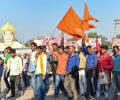
It will be heard by a five-judge Constitution Bench headed by Chief Justice Ranjan Gogoi.

The Supreme Court has rejected a petition seeking to prevent the construction of mosques named after Mughal emperor Babur.
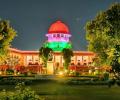
The Supreme Court has agreed to list for final hearing the pleas challenging the validity of certain provisions of the Places of Worship (Special Provisions) Act, 1991.
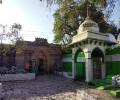
The Madhya Pradesh government has challenged the legal validity of a 1935 order from the former Dhar princely state concerning the religious status of the Bhojshala Temple-Kamal Maula Mosque, arguing it cannot be considered law.

Asserting that he prays regularly, the CJI said, "Believe me, if you have faith, God will always find a way."

Remnants of demolished Hindu temples were used to build the Babri Masjid, Justice Dharam Veer Sharma of the Lucknow bench of the Allahabad high court has held and cited evidence provided by the Archeological Survey of India to support the findings.
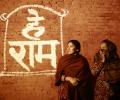
The senior advocate had on Tuesday told the court that the birth place of Lord Ram is also a deity and Muslims cannot claim right over the 2.77-acre disputed land in Ayodhya as any division of the property would amount to "destruction" and "mutilation" of the deity itself.

He alleged that the Congress was putting hurdles in the construction of a Ram temple in Ayodhya.

Justice Agarwal retired from the high court on April 23, 2020.
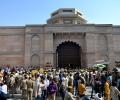
The Supreme Court of India is scheduled to hear a batch of petitions challenging the validity of certain provisions of the Places of Worship (Special Provisions) Act, 1991, which prohibits lawsuits to reclaim a place of worship or change its character from what prevailed on August 15, 1947. The pleas, including one filed by Ashwini Upadhyay, argue that these provisions violate the right to judicial remedy and create an arbitrary cut-off date. The matter will be heard in the backdrop of several ongoing cases related to places of worship, including the Gyanvapi Mosque in Varanasi and the Shahi Idgah Mosque in Mathura. The Muslim side has cited the 1991 law to argue that such suits are not maintainable. The Supreme Court had previously sought the Centre's response to Upadhyay's petition, which alleged that the law creates an "arbitrary and irrational retrospective cut-off date" for maintaining the character of places of worship.
The plea contended that Parliament has no legislative competence to acquire land belonging to the state.

He also said that now everyone should listen to RSS chief Mohan Bhagwat's advice to shun habit of fighting on small disputes.

Chief Justice of India (CJI) D Y Chandrachud on Monday said there was 'nothing wrong' in Prime Minister Narendra Modi's visit to his residence on Ganpati Puja and underscored the need for a 'sense of maturity in political sphere' on such issues.
The latest petitions have been filed by Akhil Bhartiya Shri Ram Janmabhoomi Samiti and one Farooq Ahmed challenging the high court judgement, which the apex court had dubbed as "strange" as none of the parties had demanded partition of the land.
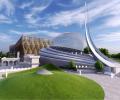
The Indo Islamic Cultural Foundation, which has been set up for the construction of the mosque, will build a mosque along with a hospital, library, community kitchen and research institute, on the land.
Rashtriya Swayamsevak Sangh executive head Bhaiyyaji Joshi has expressed confidence that the Ram temple will be constructed in Ayodhya by the time of next 'Kumbh'.
Criticising the high court verdict on partition of disputed land at Ayodhya and terming it 'strange', the apex court said that the partition of disputed land had "opened a litany of litigation.".
The Sunni Central Waqf Board is expected to file a Special Leave Petition in the Supreme Court on Tuesday, challenging the Allahabad high court verdict in the Ram Janmabhoomi-Babri Masjid title suits.
Prime Minister Dr Manmohan Singh issued this statement on Thursday evening following the Lucknow bench of the Allahabad high court's verdict on the Ayodhya title suit case:
ASI submits report on Ayodhya excavation
The Supreme Court on Friday dismissed the plea of a non-governmental organisation to intervene in the Ram Janmabhoomi-Babri Masjid title suit.
The Hindu Mahasabha, one of the parties in the Ayodhya title suits, has filed an objection relating to the judgement of the Allahabad high court on the Ram Janmabhoomi-Babri Masjid dispute.
The decision is based on the recommendations of an expert committee set up by the Centre and Uttar Pradesh government to review security arrangements at Ayodhya and the other three places following the terrorist strike.
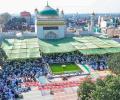
The law prohibits conversion of any place of worship and provides for the maintenance of the religious character of any place of worship as it existed on August 15, 1947.

The issue of Lord Rama grabbed headlines again on Monday when Art of Living founder Sri Sri Ravi Shankar said he would travel to Ayodhya and open talks with stakeholders in the Ram Janmabhoomi-Babri Masjid dispute on November 16.

The Supreme Court on Tuesday granted time till October 31 to the Centre to file its response to a batch of pleas challenging certain provisions of a 1991 law that prohibits filing of a lawsuit to reclaim a place of worship or seek a change in its character from what prevailed on August 15, 1947.
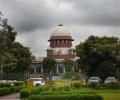
Commencing hearing on pleas challenging the constitutionality of the Places of Worship Act, 1991, the Supreme Court asked the Centre to reply to cross-pleas against or seeking implementation of statute.
The Mathura Shahi Masjid Eidgah Committee has approached the Supreme Court, requesting the court to prevent the central government from filing a response to a petition challenging the Places of Worship Act's constitutional validity. The committee accuses the BJP-led government of intentionally delaying its response. The court had previously issued a notice to the government in March 2021, but the government has yet to submit its reply despite numerous opportunities. The committee argues that the government's delay is intended to obstruct those opposing the challenge to the Places of Worship Act from filing their own responses. The petition also states that the pleas challenging the law's validity are scheduled for hearing on February 17, and closing the government's right to respond would serve justice. The Supreme Court previously issued a ruling in December 2022 that stopped courts from entertaining new lawsuits or issuing interim or final orders regarding the reclaiming of religious places, particularly mosques and dargahs. The ruling halted proceedings in 18 lawsuits filed by Hindu groups seeking surveys to confirm the original religious character of 10 mosques, including the Gyanvapi Masjid in Varanasi, the Shahi Idgah Masjid in Mathura, and the Shahi Jama Masjid in Sambhal. This decision was made in response to six petitions, including one filed by lawyer Ashwini Upadhyay, challenging various provisions of the Places of Worship Act. The 1991 law prohibits the conversion of places of worship and guarantees the preservation of their existing religious character as it stood on August 15, 1947. Notably, the dispute regarding the Ram Janmabhoomi-Babri Masjid in Ayodhya was excluded from this law. There are also several cross-petitions advocating for a strict enforcement of the 1991 law to uphold communal harmony and maintain the current status of mosques that Hindu groups seek to reclaim, claiming they were temples before being destroyed by invaders.

The Shankaracharya said the sadhus will begin their march to Ayodhya from Allahabad after Basant Panchami, which falls on February 10.

The apex court has set October 18 as deadline for completion of all arguments in the protracted land title dispute, a move that has raised the possibility of a verdict in the politically sensitive case in the middle of November.
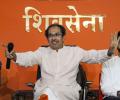
We had requested the government to make a law on construction of Ram Temple but the government did not do that, Thackeray said.
The Act prohibits conversion of any place of worship and provides for the maintenance of the religious character of any place of worship as it existed on August 15, 1947.
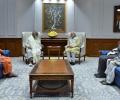
The meeting came a day after the Shri Ram Janmabhoomi Teertha Kshetra, set up recently to oversee the construction of a Ram temple in Ayodhya, met for the first time on Wednesday.
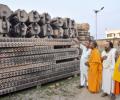
The event will be marked by prayers to Lord Shiva at the Kuber Tila shrine on the Ram Janmabhoomi site, allocated for the temple in a historic Supreme Court verdict last November.

"This has to be deprecated. This is something which should not be happening," a five-judge Constitution bench headed by Chief Justice Ranjan Gogoi said.

The Supreme Court of India has extended its stay on a court-monitored survey of the Shahi Idgah Mosque complex in Mathura, which is located adjacent to the Krishna Janmabhoomi temple. The court deferred the hearing on a plea against the survey to April 1, while the interim order staying the survey will continue to operate. The Hindu side claims that the mosque complex holds signs of a temple that once existed at the site, while the Muslim side contends that the lawsuits filed by the Hindu litigants violate the Places of Worship (Special Provisions) Act of 1991.

'During the Congress rule, the solicitor general had submitted an affidavit in the Supreme Court, stating that the government would side with the sentiments of the Hindu community if an evidence was found of a razed temple, where the mosque was built'
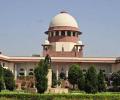
"It can stay awake till midnight to hear the Yakub Memon case and it can extend the hearing of the Ram Janmabhoomi title case for three months, while crores of Indians wait for it."
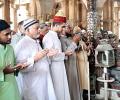
The Uttar Pradesh government has given the allotment letter to the Sunni Waqf board for the land in Dhannipur village in Sohawal tehsil in Ayodhya on the Lucknow highway, about 18 km from the district headquarters, state government spokesperson Shrikant Sharma told reporters on Wednesday.

In an interview, he recalled how Hashim Ansari, one of the original litigants in the Ram Janmabhoomi-Babri Masjid dispute, took him to the mosque on his bicycle.
 © 2026 Rediff.com - Advertise with us - Disclaimer - Privacy Policy - Sitemap - Feedback - About us - Terms of use - Grievances